
 English articles
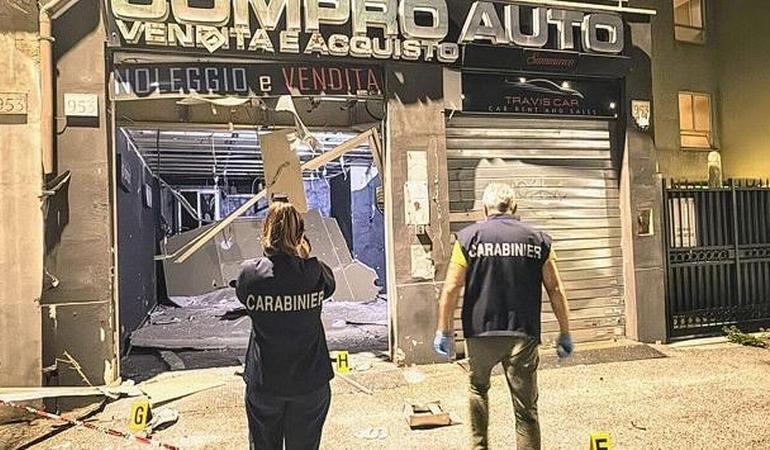
A Roma Est 15 bombe da settembre. L'ipotesi: clan che si riorganizzano



24 ottobre 2025
Three Italian football clubs, two in the Third National League (Serie C) and one in the Second National League (Serie B), have been placed under special administration in the space of a few months for mafia infiltration in their businesses. First Calcio Foggia, in May, then FC Crotone in September, and now, on Tuesday, October 21, Juve Stabia, from Castellammare di Stabia (Naples). A bleak picture emerges among the sports teams and their ties to local organized crime, whether the so-called "society of Foggia", in the Apulia regione, the 'Ndrangheta from Calabria, or the Camorra, from Campania. They may not be alone. The National Anti-Mafia Public Prosecutor's Office (DNA) "is deeply convinced that similar measures will affect other clubs in the future," said the chief Giovanni Melillo on Tuesday. "The picture is truly alarming and doesn't just concern the regions where mafias are typically rooted, and it doesn't just concern football."
"Influencing the actions of a football club is a very attractive mechanism for mafia organizations, because it allows them not only to expand their influence, but also to gain social consensus."Giovanni Melillo - National Anti-Mafia Prosecutor
On June 21, 2023, Melillo explained before the Parliamentary Anti-Mafia Committee that "influencing the actions of a football club is a very attractive mechanism for mafia organizations, because it allows them not only to expand their influence, but also to gain social consensus." This phenomenon, he continued, also widespread in the North, where "there are significant signs of 'Ndrangheta control over clubs even in the lower leagues, football clubs in Northern Italy, some with a glorious past," while in the South the phenomenon "is extremely long-standing," but generally "largely underestimated because for a long time the logic of containing threats to public order within stadiums prevailed, but meanwhile the ability of mafia organizations to manipulate sporting events for criminal purposes has grown."
These mechanisms for exploiting the rich football economy with illicit gains and prestigious connections are clearly explained in the decrees with which the courts of Foggia, Catanzaro and Naples established the judicial administration of sports clubs. For a year a professional appointed by the judges will supports the club managers with the aim of eliminating ties with mafia organisations, recovering the company and adapting it to the rules of the market, until then distorted by intimidation.
Juve Stabia is "strongly influenced by the Camorra-style criminal gangs that dominate the municipality of Castellammare di Stabia and surrounding towns, primarily the D'Alessandro clan"
"The transferts of the team, the security, the beverages, the ticket management: everything was in the hands of the Camorra," stated Naples Chief Prosecutor Nicola Gratteri, describing the situation in Castellammare di Stabia and its ties with the criminal organization of the area. For this reason, on Tuesday, October 21, Juve Stabia, which plays in Serie B and last year played in the playoffs for promotion to Serie A, losing in the semifinals, was placed under special administration. On September 11, the DNA, the Naples prosecutor's office, and the Naples police jointly requested the Naples court to place the sports club Juve Stabia srl, headed by Andrea Langella, under judicial administration. There is sufficient evidence to suggest that the company's economic and business activity "is heavily influenced by the Camorra-style criminal syndicates, , primarily the D'Alessandro clan, that dominate the municipality of Castellammare di Stabia and surrounding towns"
In the decree, the judges note that over time there have been a succession of presidents "close and/or subservient to the clan." In the 1980s, there was Renato Raffone, father-in-law of boss Luigi D'Alessandro and a leading member of the clan, a man capable of forging connections with white-collar criminals. According to collaborators, some of the more recent bosses also had ties to crime and paid protection money. "Today, despite the presence of a president – Andrea Langella – considered far removed from criminal activity, the investigations suggest that the president appears to be strongly influenced by the criminal organization."
The Camorra's influence is evident in the management of ticketing, stadium security, beverage sales, stadium cleaning, team transportation, and other areas. For this reason, magistrates have placed Juve Stabia under special administration to review its relationships with "satellite" companies within the football system, and on Thursday, the Naples Prefecture issued eleven anti-mafia interdiction orders to halt the operations of certain clubs.
To begin with, police investigations revealed that many ticket sellers, when issuing season tickets or coupons, altered the personal data entered into the system to facilitate the entry of people with criminal records or those subject to a DASPO (a ban from attending sporting events to prevent violent crimes), "many of whom were connected to the D'Alessandro clan." Among those, there is Emanuele Tremante, the leader of a group of fanatic supporters (also named ultras, in Italian): "A former leader of organized support and close to top members of the clan, he purchased a season ticket by declaring an incorrect date of birth." Many tickets were given away free of charge to criminals and members of the clan. According to the magistrates, it is unlikely that the top management of the sports club were unaware of this. Indeed, they note in the decree that a trusted man of president Langella, Ignazio Avitabile, brother of Giovanni Battista, a man with a long list of convictions and ties to the D'Alessandro clan, attended home games from the "Hospitality Room."
Some Camorra-linked criminals worked at the company that sells drinks inside the stadium, which was registered to people with no criminal record. "Even the stadium's cleaning services are in the hands of the Camorra," through the company owned by Luigi Calabrese, the husband of one of boss Luigi D'Alessandro's daughters. Calabrese, "himself a leading figure" in the group, was able to "maintain good relations with neighboring clans," for example by hiring the wife of a leader of a rival clan from Torre Annunziata, a town near Castellammare di Stabia. Another son-in-law of boss D'Alessandro, Pasquale Esposito , was identified by police as driving the team bus in 2020 and 2021. Even the ambulance service has "always been managed by clan members, who view it as their own business," as multiple investigations into the sector have shown.
The control of a football team – especially "one that's also on its way to the First National League" – can be a "sounding board for organized crime," which was and is present in the stands through the ultras. The pentito (a former mobster who is helping investigators) Pasquale Rapicano revealed how the main ultra leaders are linked to the D'Alessandro clan and its allies. Moreover, as authorities verified, banners dedicated to the organization and its leader, "Luigi o' lione" (Luigi the Lion), were displayed. The decree states that "criminal figures are responsible for maintaining order inside the stadium," not the companies appointed by Juve Stabia to provide security, companies that aren't even qualified (or rather, licensed by the public authority) to perform such duties: "This circumstance certainly couldn't have escaped the attention of the club's top management."
There are also serious doubts about the management of the youth academy. During a conversation on August 21, for example, Silverio Onorato, a boss currently serving a prison sentence, suggested that his son Michele, who aspires to play for Juve Stabia, introduce himself to team manager Pino Di Maio, specifying their relationship. Among the youth academy directors is a man, Roberto Amodio , who, according to informer Pasquale Rapicano, "does what the D'Alessandros say," who allegedly "imposed" him. Amodio had been implicated in clandestine betting and match-fixing in collaboration with members of the Camorra. He was never convicted, but received a disciplinary sanction, with a three-year suspension, while the club received a three-point penalty in the 2011-12 season. "His regular, unpaid presence within the club's youth academy – in what capacity, one wonders – raises doubts."
The Crotone team was "directly or at least indirectly subjected to conditions of intimidation and subjugation by members of complex and ramified 'Ndrangheta clans"
Years pass, the ownership remains the same, Crotone's criminal structures change, but not their interest in the football team, which played in Serie A between 2016 and 2018, with another stint in the 2020/21 season. And so, a few weeks before Juve Stabia was placed under special administration, FC Crotone was also placed under the management of a judicial administrator, requested by DNA, the Catanzaro prosecutor's office, and the Catanzaro police, a decree issued by the Calabrian court on July 16 and confirmed on October 20.
The club is owned by brothers Raffaele and Gianni Vrenna, the former and current presidents, respectively. In 2015, the Catanzaro District Anti-Mafia Directorate had requested the seizure of the club and special surveillance for the Vrennas, but the Crotone court and the Catanzaro Court of Appeal rejected the request, deeming the Vrennas innocent of criminal activity and victims of intimidation.
Subsequent investigations, such as the Glicine-Acheronte inquiry, have revealed criminal interests tied to the club's management, which over the past ten years has been subjected "directly or at least indirectly to conditions of intimidation and subjugation by members of complex and ramified 'Ndrangheta clans." According to the judges, there is a "massive and ongoing risk of infiltration." In short, the Vrennas – grandsons of a former member of the Vrenna clan – are said to have paid and offered jobs to some men of the criminal groups to put an end to the intimidation and ensure their own safety. Boss Luigi Bonaventura, another pentito, recounted how he himself had begun to take care of the security of FC Crotone, thanks to his “diplomatic contacts” with other criminals, who attacked footballers and employees and tried to get into the stadium for free.
For several years, the security guards for the stadium were supplied by two clans, one from Crotone and the other from Cosenza, who split the business equally. The hosts then pushed the others out, and the Megna clan took over the management of the operation through several associated companies. When then-president Raffaele Vrenna attempted to resist the clan's demands for security, he was attacked by two hooded men on the Crotone seafront.
Of course, match tickets are also a tempting proposition here, especially when Crotone, having recently reached Serie A, faces off against the big names in Italian football. The ticket business, including fan travel and team merchandise, is controlled by a member of the Barilari-Foschini clan, "with the approval of the ruling clan headed by Megna," whose boss Domenico had interests in obtaining and reselling tickets. The boss's nephew, Cesare Carvelli, who was the team's driver during the 2016/17 season, "thanks to his relationships with various stewards, guaranteed access to the stadium for individuals without proper tickets," either to different sections or in other people's names.
The court found "sufficient evidence to suggest that the free exercise by FC Crotone srl, at least in the specific areas of security and stadium entrance management, was profoundly influenced by the invasive presence of Crotone 'Ndrangheta clans." The club, directly or indirectly subjected to intimidation and subjugation, ended up "facilitating the illicit activity of individuals suspected of belonging to local 'Ndrangheta syndicates" in football, a sector that generates "significant and not always traceable monetary flows as well as bringing particular social visibility."
"Foggia Calcio has been subjected, through Marco Lombardi, to a strategy of intimidation and influence."
In Apulia, too, the DNA, together with the Foggia prosecutor's office and the police, have shed light on the pressure exerted by organized crime on the local football team, attempting to influence its economic activities and generate profits. The situation, however, appears different from previous investigations, as investigators are focusing not so much on the club's collusion, but rather on threats capable of influencing decisions. The request particularly highlights the attempted extortion committed by a convicted felon, Marco Lombardi, and his accomplices, with the approval of the "Society of Foggia", the city's criminal organization.
Lombardi, who was romantically involved with a woman who first ran the stadium ticket office and then the team shop, wanted to get a job from president Nicola Canonico. When the entrepreneur kicked him out, the convicted felon launched a series of acts of vandalism, including damage to the cars of players and managers, the theft of sports equipment, graffiti on the walls inside the stadium, and a harsh smear campaign against the president himself.
According to the court, "the Foggia Calcio club is being subjected, through Marco Lombardi, to a strategy of intimidation and influence" that "restores a scenario of interference by organised crime in the company" because Lombardi is close "to criminal circles, in particular to prominent members of the Sinesi-Francavilla gang, with whom he has had close and long-standing relationships".
Lombardi's campaign, which included threats to players and managers and denigration of the ownership, "impacted President Canonico's freedom of self-determination, instilling in him the awareness of the role of an unwelcome president and a veiled fear of prejudicial consequences typical of certain mafia contexts."
Among the elements that prosecutors and police highlight to prove criminal interference in Foggia Calcio is the management of the stadium bar, which is controlled by a woman with ties to men from the Foggia club. According to the court, however, the matter deserves further investigation during the administration of the club.
La tua donazione ci servirà a mantenere il sito accessibile a tutti
Il nuovo numero dedicato alla "criminalità riorganizzata": dalle reti finanziarie clandestine al narcotraffico, dalle nuove tecnologie alla violenza che torna nelle strade di Palermo. Un dossier che mette in fila numeri, inchieste e testimonianze per mostrare il volto attuale delle mafie

La tua donazione ci servirà a mantenere il sito accessibile a tutti



 Dona con Paypal
 Dona con Satispay