 English articles
Permessi dal carcere duro e telefonini in cella, il pericolo dei boss che tornano al comando


17 novembre 2025
In the second half of October, US federal authorities unveiled a series of indictments as part of one of the most sophisticated and extensive sports betting operations in the country's history. The investigation led to the arrest of 34 people, including prominent NBA figures such as Terry Rozier of the Miami Heat and coach Chauncey Billups of the Portland Trail Blazers, as well as members and affiliates of four major Italian-American organised crime families - the Cosa Nostra: Bonanno, Gambino, Lucchese and Genovese - involved in a tens of millions of dollars fraud.
The Italian-American mafia in the US is still a source of deep attraction. This is because it is a system of power that embodies a narrative as simple as it is effective: order where disorder reigns, authoritative leadership in an uncertain world, codes of conduct that reward loyalty and discipline more than formal rules
The fraud, dubbed the Rigged Poker Scheme, was divided into two separate but related criminal activities. The first involved illegal sports betting based on the use of confidential information about NBA players and teams, which was exploited to manipulate outcomes and betting profits. The second involved rigged poker games, carried out with sophisticated technology in clandestine rooms mainly in the New York area, and protected by Cosa Nostra families.
Pope Francis and the mafias: gestures and words, excommunication and forgiveness
According to the indictment, the operation combined the traditional methods of control and protection typical of Mafia families with modern instruments capable of reading and transmitting card details, so as to falsify poker games. The indictment also describes the creation of 'cheating teams' - coordinated teams that shared information to maximise victim losses - operating in some cases on a national scale.
The case has had considerable media resonance in the United States, with the BBC and CNN pages constantly being updated, and has brought to light the never-ending debate on the (r)existence of the Italian-American mafia in the attacks of the judiciary, especially in New York, in the 1990s and 2000s.
The Italian-American mafia in the US is still a source of deep attraction. This is because it is a system of power that embodies a narrative as simple as it is effective: order where disorder reigns, authoritative leadership in an uncertain world, codes of conduct that reward loyalty and discipline more than formal rules. Not surprisingly, in times marked by economic precariousness, social polarisation and distrust in institutions, these elements offer narrative reassurance: there is a leader who makes clear-cut decisions, there is a world where loyalty counts more than bureaucracy, there is still the promise of redemption through swift and direct means - the American dream. It is a comforting fantasy that mitigates the ambiguities and compromises of collective life in a country going through a very complex phase of its history today.
UN rapporteur Satterthwaite: 'Attacks on judges are against everyone'
It was popular culture that crystallised and amplified this mythology of the American mafia. From the cinema of The Godfather to the Sopranos TV series, fiction has transformed bosses and affiliates into epic figures: tragic anti-heroes, charismatic leaders with their own moral code. These representations have never merely entertained: they have shaped the public imagination, constructed and consolidated stereotypes, and reinforced symbols of masculinity, honour and community identity. Repeated endlessly, the stories of the mafiosi in Goodfellas have become a form of shared memory that today makes the contemporary mafia still an attractive and persistent narrative element.
However, the recent judicial chronicle - especially in the case of the Rigged Poker Scheme - reminds us that fascination does not equate with harmlessness. In this latest case, the mix of traditional intimidation and technological innovation makes this mafia appear as a subject capable of reinventing itself: no longer just extortion and racketeering in the old fashioned way (which have never failed over the years), but the use of wireless devices, espionage and sophisticated organisational strategies. This narrative modernisation makes the tale even more compelling - and more dangerous, because it facilitates penetration into seemingly legitimate contexts.
Italy lightens restrictions on gambling favoring the football and the betting industry
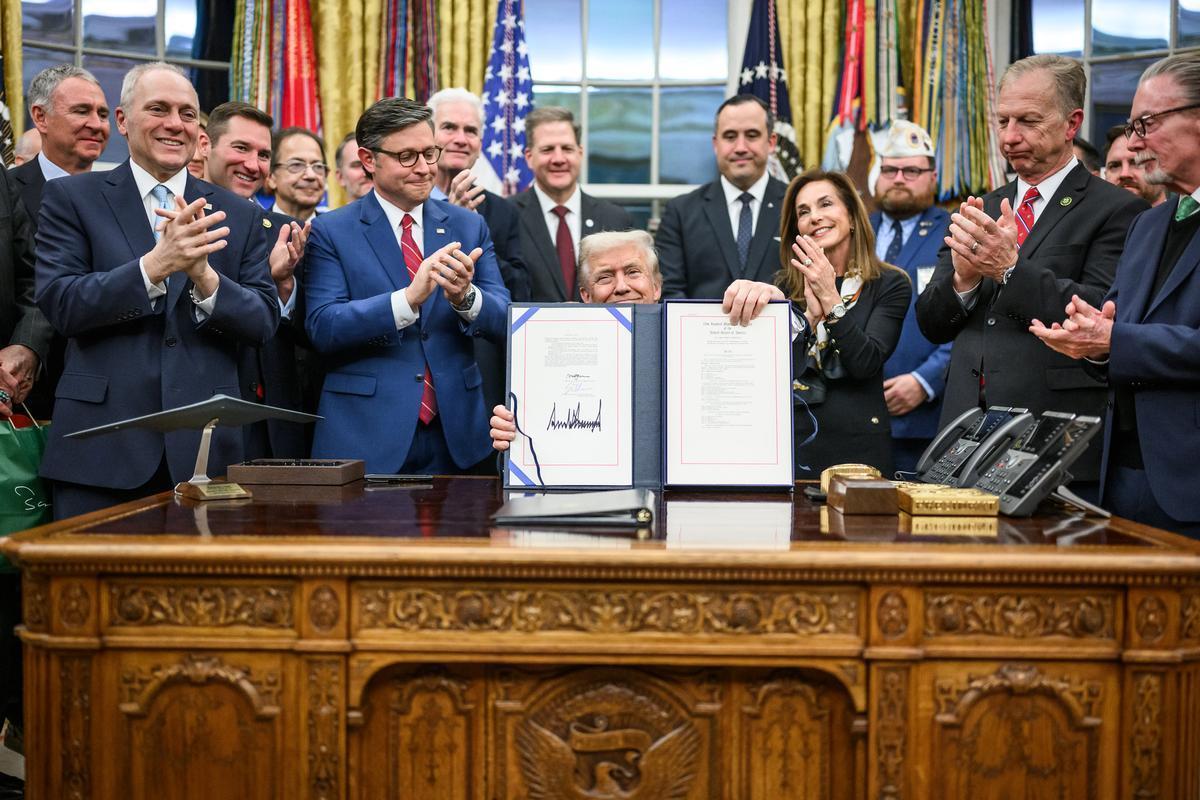
And here we must introduce another factor: the cultural overlap between the American Mafia myth and the country's contemporary political models. An article published in the journal Social Sciences in 2024 and written by Najja K. Baptist and Kenneth A. Clark, Unmasking the Authoritarian Mob Boss: A Critical Analysis of Donald Trump's Political Leadership (available here), draws an explicit parallel between Trump's political leadership and the hierarchical, loyalty-based structures typical of American mafia-style organised crime. This study underlines how Trump's approach to power and leadership mirrors that of the apex figures of organised crime: decision-making style based on personal loyalty, aggressive negotiations, emphasis on charisma and individual strength over institutional procedures.
One cannot, of course, impute to Trump specific offences relating to organised crime, except perhaps those that, according to him too, are historically linked to his investments in Manhattan real estate, as Eric Dezenhall reports in his Wiseguys and the White House: Gangsters, Presidents and the Deals They Made, published by Harper Collins. Rather, the aim is to highlight an overlapping of style and symbols that contributes to making the mafia model culturally more credible and even palatable. The rhetoric of the boss who 'makes' and who solves by bypassing institutional rules resonates with the same narrative substrate that makes the fictional boss attractive: apparent efficiency, immediate order, protection reserved for those on the right side, i.e. with the boss himself. In this direction moves, for instance, the interpretation of Trump's power proposed in an article in The Atlantic by Adam Serwer.
The Italian Government cancels the work against gambling addiction
Virginia Di Gaetano in a long-read that appeared in ItalicsMag in October 2020 (available here), titled Donald Trump and his Italian American Supporters, writes that Donald Trump 'exhibits the same brazen disregard for convention that our favourite mafia characters have, both in art and in real life, during the most prolific era of organised crime in the United States'. Trump is favourably compared to a Mafia boss by the Italian-American community 'precisely because of his blatant disregard for those barriers that should have kept him out of public office'.
It is Trump's vulgarity that makes him popular with a specific sub-category of Americans who vote increasingly to the right because as Pascal Bruckner and Mary Byrd Kelly observe, "vulgarity arises at the moment when the people, at least in principle, move from being subjugated to becoming protagonists in political life. It constitutes the terrible dissonance that emerges from the mutual contamination of different environments and the intermingling of separate classes that do not know quite how to stay in their place'.
The consequences of this mafia-style vulgarisation in the figure of Trump are concrete. Indeed, some studies even discuss how Trump's campaign and presidency have mainstreamed certain exclusionary or authoritarian tactics, sometimes drawing analogies with the methods used by organised crime to consolidate its power. But when political leaders adopt decision-making and relational modes that privilege personal ties and opaque transactions, with authoritarian overtones towards those who disagree with them, the line between illegitimacy and pragmatism becomes blurred. This favours the normalisation of practices that erode trust in institutions: nepotism, exchanges of favours, decisions made on the basis of loyalty rather than law. Even from the point of view of international relations, the same logic can translate into bilateral relations managed as personal agreements, with risks for multilateral alliances and norms.
Moreover, the media consumerism of the mafia phenomenon, whereby the news becomes entertainment as much as films and TV series, amplifies the myth and sometimes sweetens the violence and real damage that organised crime causes to communities. This same media consumerism gives those who behave like mafiosi, as is said of President Trump, public exposure somewhere between reality and fiction, and the same damage-diluting effect for the benefit of entertainment. If mythologising the mafia obscures the victims, mythologising mafiosi, or those who appear to us as mafiosi, trivialises their corruption and provides narratives that can only be consolatory for social groups weary of everyday frustrations.
The case of the Rigged Poker Scheme is a stark warning: the Italian-American mafia is not just a nostalgic myth or a glamorous narrative model, but a real organisation capable of technological renewal and, like all mafias, of insinuating itself into seemingly legitimate spheres. The seduction of Mafia stories and symbols - reinforced by pop culture and rhetorical overlap with certain political figures - risks normalising personal, opaque and authoritarian power practices, blurring the line between spectacle and crime.
Defending American democracy today therefore means not only rigorously prosecuting the crimes of its ruling class, but dismantling their mythology: prioritising the memory of the victims and the social damage of policies based on the fictitious glory of the leader, reinforcing institutional transparency and public accountability, and cultivating a civic narrative that rejects the idea that effectiveness is worth more than legality. This is the only way to bar the way for those who want to turn consensus into protection and glamour into impunity.
La tua donazione ci servirà a mantenere il sito accessibile a tutti
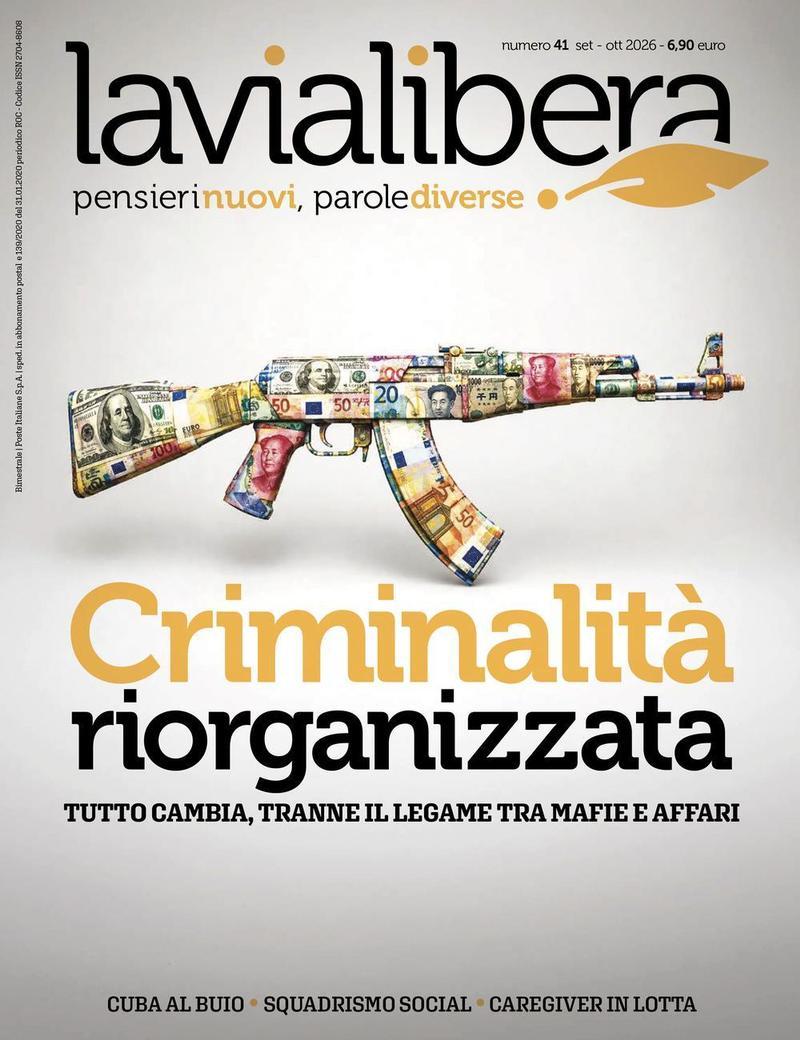
Il nuovo numero dedicato alla "criminalità riorganizzata": dalle reti finanziarie clandestine al narcotraffico, dalle nuove tecnologie alla violenza che torna nelle strade di Palermo. Un dossier che mette in fila numeri, inchieste e testimonianze per mostrare il volto attuale delle mafie

La tua donazione ci servirà a mantenere il sito accessibile a tutti


 Editoriali e Commenti
 Dona con Paypal
 Dona con Satispay