
 English articles
 Mafie ● Resistenze
Permessi dal carcere duro e telefonini in cella, il pericolo dei boss che tornano al comando


10 marzo 2025
Investigating and prosecuting allegedly rigged university competitions has become impossible. Trials are stopped , charges are dropped, investigations struggle to get off the ground. Those who feel they have been ousted, not adequately assessed, victims of abuse are left without answers. This is the result of a peculiar combination, given by a 2023 Supreme Court ruling and the repeal of abuse of office established by the reform signed by Justice Minister Carlo Nordio, which came into force in August.
Some trials have already encountered obstacles because of this change, and in the future it will be difficult to bring to the dock those professors who agree to favour the career of their favourite pupil or the undeserving 'son of art' at the expense of others, unless there is an exchange of bribes, unlawful pressure or demands, falsification of public acts or something else behind it. We will have to wait until 7 May, when the Constitutional Court will consider a series of appeals brought by the many courts against the repeal of abuse of office.
World Anti-Corruption Day: the best way not to stamp out bribery
Let's start with the ruling of the Supreme Court, which arrived on 24 May 2023 to sanction the end of a trial that arose from the complaint of a doctor, Marco Fraccalvieri, a plastic surgery specialist who aspired to the role of associate professor at the University of Turin. The call for applications had been secured because - as he had learned from professor Stefano Bruschi, director of the School of Specialisation - it was already destined for Maria Alessandra Bocchiotti, daughter of Giovanni Bocchiotti, Bruschi's predecessor. Fraccalvieri, assisted by the lawyer Michele Galasso, believed that, due to his qualifications and experience, the chair belonged to him, and so he denounced what was happening. On 30 July 2021, the Court of Turin sentenced Alessandra Bocchiotti (six months) and Stefano Bruschi (four months) for bid-rigging, with a discount for the shortened trial. However, on 21 November 2022, the Court of Appeal overturned the conviction for bid-rigging, asking the public prosecutor to challenge instead the hypothesis of abuse of office, i.e. the offence committed by a public official who, by violating certain rules or "omitting to abstain in the presence of his own interest or that of a close relative or in the other prescribed cases, intentionally procures for himself or others an unfair pecuniary advantage" or harms someone.
The reason? In brief: the offence of bid-rigging would only concern tenders. The public prosecutor's office, in disagreement, appealed to the Supreme Court, which, however, confirmed the verdict on 24 May 2023: the offence of bid-rigging cannot be applied to competitions for staff recruitment. For these reasons, the offence of abuse of office should be contested in this case.
This ruling reiterated a line to be followed and is the one that has been adopted in other proceedings in Italy, not only for university competitions, but also for other personnel selections. The latest change, however, came on 9 August 2024, with the infamous justice reform signed by Nordio which, among other things, repealed abuse of office, the bogeyman of many public officials. What to do then in those trials on allegedly rigged competitions, where instead of bid-rigging this offence was being contested?
Many judges felt it was appropriate to temporarily suspend the proceedings and raise a question of legitimacy, asking the Constitutional Court whether the repeal of abuse of office could be deemed to comply with the Constitution and international standards that Italy must respect, such as the Merida Convention against Corruption?
"It is not explained why, having to ensure the good performance of public administration in areas equally important as those of public invitations and public competitions, it was chosen not to supervise criminally the proper conduct of the latter by maintaining, the criminal significance of the irregular conduct of the first"
Fabio Gugliotta - Judge for the preliminary hearing of the Court of Florence
This is the direction taken by the Court of Florence, where a big trial is under way on some allegedly rigged competitions at the Meyer and Careggi university hospitals. Twice, in two different strands of the proceedings, magistrates have raised a question of constitutional legitimacy: the first on 3 October, the second on 24 October. In the first order, Judge Fabio Gugliotta wrote that without abuse of office, there is no possibility “of bringing the same (contested facts, ed.) within the scope of other offences”. He also goes on to challenge the decision of the Supreme Court of Cassation, according to which bid-rigging should not be contested: “It is not explained why, since it is necessary to ensure the good performance of the public administration in equally important sectors such as those of public tenders and public competitions, it was decided not to criminally oversee the proper conduct of the latter, while maintaining the criminal relevance of the irregular conduct of the former”. Then he notes: “Some of the allegations made in the trial underway before this court concern alleged conduct of 'tailor-made' drafting of a competition notice, in order to determine the victory of a specific competitor; well, from now on, such conduct would be devoid of criminal sanction, with all the consequences at the level of the prevention of important illicit conduct detrimental to general interests”.
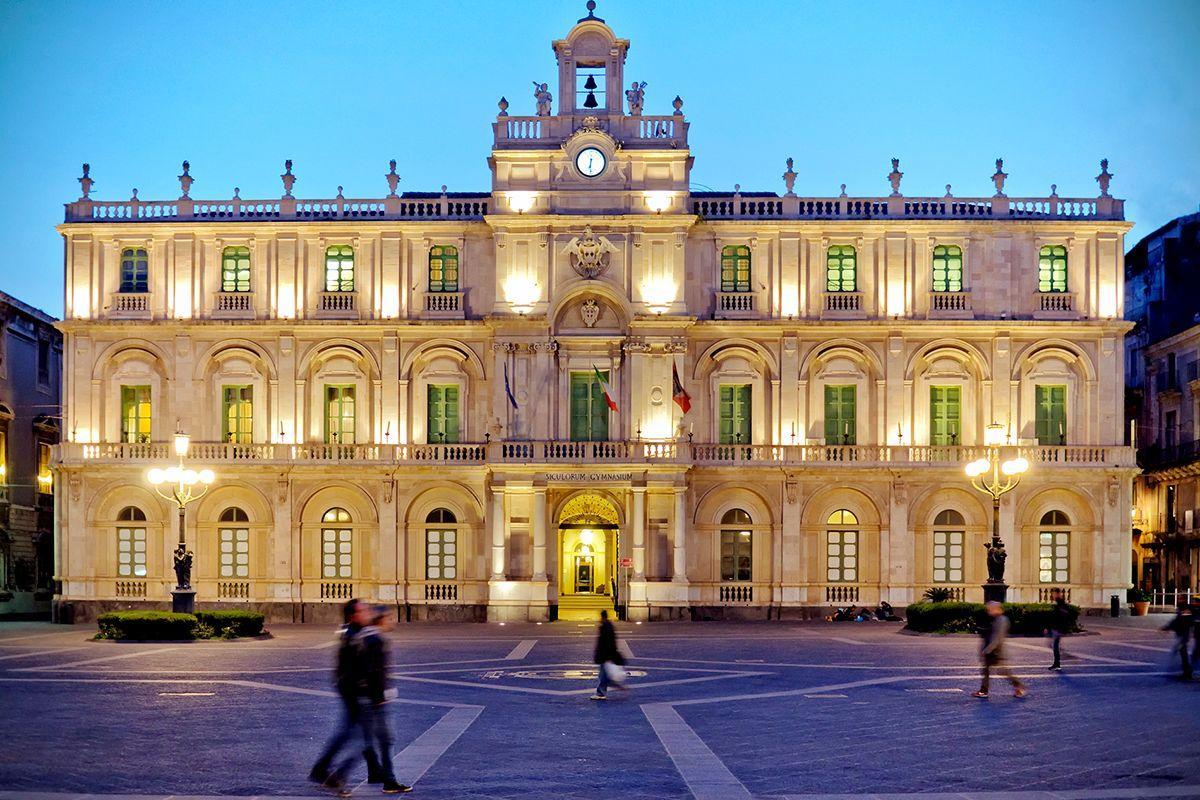
Doubts also arose in the court of Catania. Here, in 2019, the “Banned University” investigation was conducted, a name that speaks volumes. It is a big investigation, the outcome of which is still very uncertain. The prosecution accused 66 people (including 60 professors) of criminal conspiracy, corruption, bid-rigging and abuse of office for having disturbed 27 selection procedures for full professors, associates or researchers. The investigators' suspicions also concerned many other selections. The then rector Francesco Basile was suspended as a precautionary measure along with nine other professors and then resigned. In the meantime, the trial had a circuitous route, divided into several strands. In one of these, when remanding nine suspects for trial, the judge for the preliminary hearing ruled that it should not be a case of bid-rigging, but abuse of office (as the Court of Cassation later confirmed). However, after the Nordio reform, on 26 November the second criminal section of the court accepted the prosecution's petition and decided to ask the Constitutional Court whether the repeal of Article 323 of the Criminal Code (abuse of office, precisely) complies with the Constitution and the Merida Convention. Catania's public prosecutor's office and the court believe that without that rule and without the possibility of challenging bid-rigging there would be a regulatory vacuum and citizens participating in public competitions suffering abuse by public officials could not be protected.
There are also questions in Genoa. Here the preliminary hearing is underway against 12 people involved in the investigation into allegedly piloted competitions at the city university's Faculty of Law: they allegedly tailor-made a series of calls for tenders so that they could somehow pre-determine the winners and for this they are accused in various ways of forgery committed by a public official, abuse of office, bid rigging, trafficking in unlawful influence and more. The investigation had arisen after the ruling of the Regional Administrative Court (TAR, first instance body of the Italian administrative justice), which in late 2020 had annulled, on the appeal of an excluded candidate, a competition for a researcher in tax law won by the son of a professor emeritus. At the first preliminary hearing, on 20 November, the public prosecutor asked to raise the question of constitutionality. The court has not yet decided, but in the meantime a public hearing has been scheduled at the Palazzo della Consulta (Seat of the Constitutional Court of the Italian Republic) where the many questions of constitutional legitimacy raised by many Italian courts will be discussed. If the Court were to 'validate' the repeal of abuse of office, many trials for rigged competitions would be destined to be closed, except for those in which other crimes are also contested. "A Constitutional Court ruling that restores the possibility of intervening on these crimes would be fundamental," says Giambattista Sciré, a history researcher at the University of Catania and founder of the Transparency and Merit association, set up in 2017 to provide a point of reference for those who wanted to report irregular competitions.
Freedom of the press is increasingly threatened in Italy
"With these changes, those who want to make up the competitions can rest easy. There seem to be fewer cases, but they continue with impunity"
Giambattista Sciré - Founder of the association "Trasparenza e merito"
"The association continues to receive reports, but compared to the past they have decreased," Sciré continues. "There was a period when every day we received five or six reports of various types and we had to skim them before supporting appeals or complaints. From its foundation until 2022, the association had received 4,439 reports on suspicious competitions, cases of mobbing and others. Of these, 1,055 turned into administrative appeals or complaints to the judicial authorities. "Our battle had given confidence to those who previously accepted bullying despite themselves. Now, with these changes, those who want to rig competitions can rest assured. There seem to be fewer cases, but they continue with impunity”.
After the Supreme Court ruling and the repeal of abuse of office, Transparency and Merit raised the question of how to proceed and consulted lawyers. Recourse to administrative justice remains an option, but not a complete one: “You can access the acts and then, if there are the elements, appeal to the Tar, but this does not lead to prosecution of the offender. It cancels the competition and must be redone, with different judging commissions, and it is not certain that the choice of the winner will not be repeated”. In the words of the judges from Catania, everything would be “remitted to private initiative, of an eventual nature” and would not protect the general public interest, they write in their order.
Finding evidence to prove the irregularity of the competition, is more complex: “In the procedures there are many steps between the announcement, appointment of the commission, decision of the evaluation criteria, test and response, but often the co-optation takes place earlier, in private, not in the official, deciding which posts to put up for tender,” explains Sciré. “The offence can therefore be committed not in the official phase, but in the previous one. We recommend documenting, if possible, that phase in order to be able to hypothesise other offences: forgery, extortion and other elements that can allow the magistrates to move forward,” he concludes.
La tua donazione ci servirà a mantenere il sito accessibile a tutti
Il nuovo numero dedicato alla "criminalità riorganizzata": dalle reti finanziarie clandestine al narcotraffico, dalle nuove tecnologie alla violenza che torna nelle strade di Palermo. Un dossier che mette in fila numeri, inchieste e testimonianze per mostrare il volto attuale delle mafie




La tua donazione ci servirà a mantenere il sito accessibile a tutti



 Editoriali e Commenti
 Dona con Paypal
 Dona con Satispay