
 Farsi la galera
"Ragazzi, distinguete il bene dal male, perché il conto da pagare è alto"


15 dicembre 2025
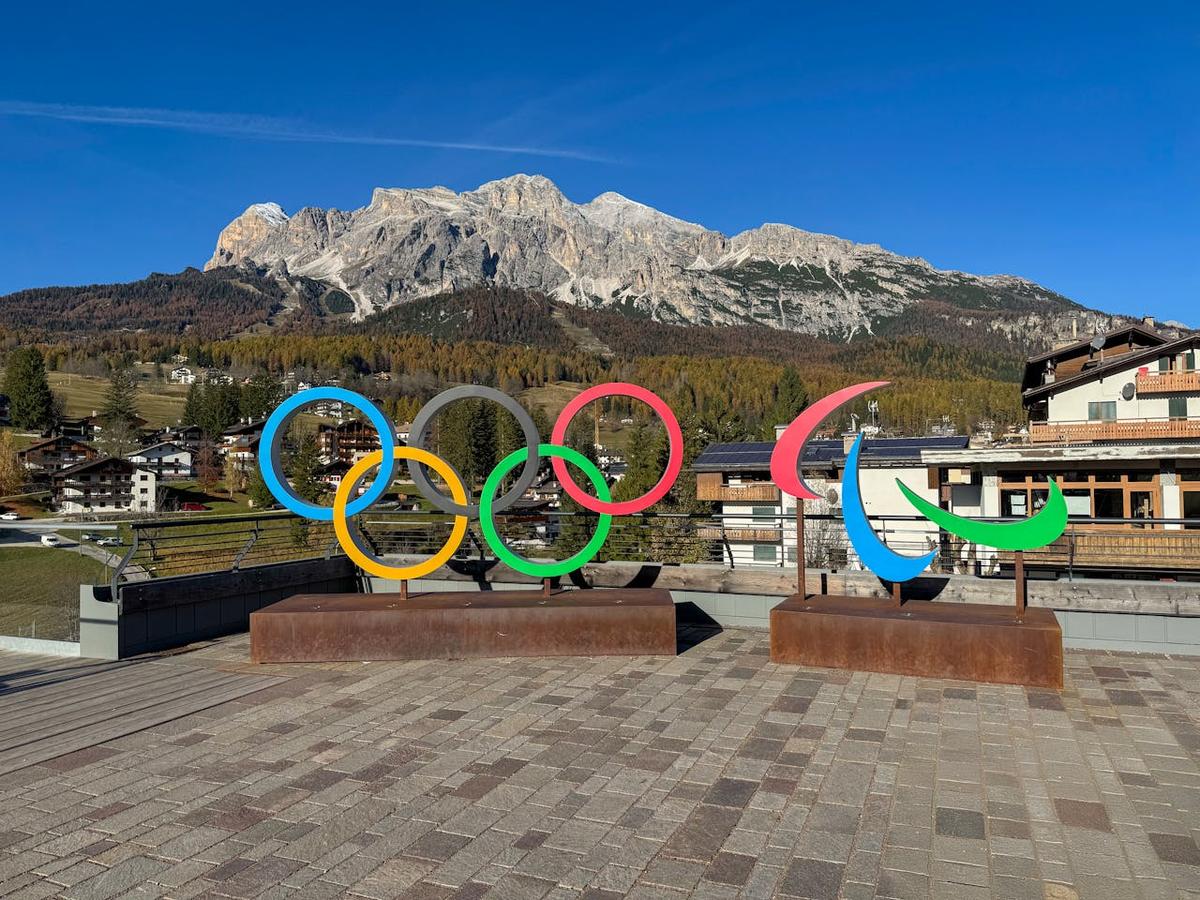
Of the €3.54 billion spent by Simico on the Milan–Cortina Winter Olympics, which will open on 6 February with the opening ceremony, only 13% concerns works directly linked to competitions and sporting events. The remaining 87% is allocated to permanent infrastructure projects intended for local communities—the so-called “legacy”. “For every euro spent on facilities indispensable to the Games, €6.6 is spent on legacy projects,” states the third report by Open Olympics 2026, a civic network of 20 organisations led by Libera, including WWF Italy, Italia Nostra, Legambiente, CAI, Mountain Wilderness Italia and CIPRA Italia. The initiative was created to bring transparency to the financial and environmental impact of the sporting event. Despite the extensive work carried out by this group of activists and experts, and despite repeated calls for transparency, many aspects remain shrouded in uncertainty.
Launched in 2024, the campaign achieved a significant result with the Milan Cortina 2020–2026 Infrastructure Company (Simico): the publication of a dataset on projects, to be updated periodically. This has allowed Open Olympics to monitor the progress of works and costs, both for facilities built or refurbished specifically for sporting events and for ancillary infrastructure such as roads and rail links. The data clearly show that only 13% of the projects concern the Winter Games, while the rest are classified as “legacy”.
Now that Milan-Cortina Olympics are over, what next? Debts and unfinished construction sites
Most of these projects, however, will not be completed in time for the Milan–Cortina Winter Olympics and Paralympics. Cost overruns on legacy works have had a far greater impact on overall Olympic spending—more than €133 million—“over five times higher than the increase related to Olympic event interventions (+€23 million),” the report notes.
What will remain, therefore, are projects and construction sites. “Sixteen works have been completed; 51 are under construction; three are in the tender phase; and 28 are still in the design stage,” the report states. “Only 42 have a completion date before the start of the Games. This means that 57% of the projects will be finished after the event, with the last site scheduled for completion in 2033.” Some facilities, such as the bobsleigh track and the Olympic Village in Cortina, will only be fully completed after the Games have ended.
Adding up the increases, the picture is clear: total project costs have risen by €157 million (+4.6%), largely due to cost overruns affecting 34 projects.
The five most significant increases in absolute terms are:
the Longarone variant, in the province of Belluno (+€43 million);
the Perca bypass, in the autonomous province of Bolzano (+€31 million, a 22.14% increase on the initial estimate);
the southern ring road of Sondrio (+€13.3 million), which also shows the highest percentage increase;
the Socrepes cableway near Cortina (+€13 million);
the Livigno ski connection, in the province of Sondrio (+€8.5 million).
These increases were not offset by savings elsewhere, which occurred in only two projects.
Milan-Cortina 2026 Olympics, skyrocketing rents. Also for volunteers
On many fronts, the campaign has been unable to obtain crucial information. The Open Olympics report also serves to highlight opacity and gaps in disclosure.
Very little is known, for example, about the environmental consequences of the Games and the associated works. For 64% of the projects, no environmental impact assessment has been carried out. There is no information on the carbon footprint of individual projects. “Adding up the carbon footprint of each work would have shown whether and to what extent the Games have contributed to climate change and how they are altering an already fragile environment,” the document states.
The only available figure concerns the Milan–Cortina Foundation itself: its emissions—estimated in 2024—would slightly exceed one million tonnes of CO₂ equivalent over the entire event cycle, roughly equivalent to the emissions generated by flying all Milan residents on a round-trip Rome–New York flight. This, however, relates only to the events, not to the infrastructure. At Paris 2024, “the overall footprint reported in official documents ranged between 1.6 and 2.1 million tonnes of CO₂ equivalent,” while estimates for the PyeongChang 2018 Winter Olympics and Paralympics put emissions at around 1.56 million tonnes.
Key data are also missing on who is being paid and how much subcontractors receive. There are 516 subcontracting firms, compared with 101 main contractors. “Careful scrutiny of subcontracting is essential, because it is precisely in the lower tiers of supply chains that the greatest risks are concentrated,” from workers’ rights and safety issues to potential criminal infiltration. Some data are available—“an important result, thanks to the willingness of Simico S.p.A. and pressure also exerted by the joint Antimafia and Olympics Commissions of the Milan City Council during public discussions”—but information on financial values is still lacking and difficult both for the company to provide and for Open Olympics to obtain.
Milan-Cortina 2026 Olympics, the organising companies don't like the civic monitoring
The campaign acknowledges that it has failed—through no fault of its own—to achieve one of its objectives: creating a single platform containing data from all entities involved in delivering the works. Simico’s data are available, but those from Anas and from local authorities such as regions, provinces and municipalities are missing.
In response to freedom of information requests submitted by Libera, the Lombardy Region replied, while the City of Milan initially refused and later postponed disclosure to an unspecified date. Requests submitted in Trentino–Alto Adige and Veneto remain unanswered.
Open Olympics 2026 raises a fundamental question: “Is it really necessary for civil society, in order to have its right to know recognised regarding works linked to the Games and their costs, to engage in a tug-of-war with institutions? Even at the risk of hitting bureaucratic walls or having the doors of data slammed shut, as in the case of the City of Milan?” As a result, “a wide margin of uncertainty remains.” The report concludes: “There is a data asymmetry that, as the Open Olympics 2026 network, we are unable to resolve. This is not due to analytical limits, but to the structural absence of a single place that collects all works—those included in the Plan and those outside it—in a unified manner. Information is effectively asymmetric: detailed where Simico S.p.A. operates, fragmented or absent elsewhere. Every proposal to overcome this asymmetry, raised in all discussions over the past year and a half, has so far produced no result.”
The organisations involved have not given up. “In any case, as the Open Olympics 2026 network, we remain available for public discussion on any solution that fully enables our right to know.”
There is also no data on the costs of organising the Games, which fall under the Milan–Cortina Foundation. By government decree, the Foundation has been classified as a private body—a decision that will be examined by the Constitutional Court. What is known is that €43 million come from the fund for victims of mafia and usury and for orphans of femicide, as revealed by lavialibera.
Nor is there clarity on spending trends related to the €328 million allocated to the extraordinary commissioner for the Paralympics, a figure far higher than the €71.5 million initially planned for the Paralympic Games themselves. On 16 December, three months will have passed since the appointment of Commissioner Giuseppe Fasiol, the deadline for submitting his first report to the Ministry of Sport. “The role of the Paralympics Commissioner appears poorly defined, both in terms of actual responsibilities and scope of action, and at present there is insufficient information to exercise the right to know how the Commissioner is operating and spending funds.”
“The Paralympics can be a useful tool to promote social inclusion and the removal of barriers,” Open Olympics continues, “but it must be remembered that such barriers need to be dismantled in everyday life, through continuous investment and not just for a single event.” The network points out that the Single Fund for the Inclusion of Persons with Disabilities has fallen from more than €552 million in 2024 to just under €232 million per year from 2025 onwards—a reduction of €320 million—describing this as “a worrying scenario.”
Although this is the final report before the start of the Games, the Open Olympics 2026 network says its work will continue “until the last project is completed and until the questions raised in this report are answered.” It also expects “detailed final accounting data, both on the event and on the expenditures incurred, as well as on related works,” noting that “in the event of cash shortfalls at the Milan–Cortina Foundation, the State will ultimately foot the bill.”
Work is also under way to export this model of civic monitoring beyond Italy, ahead of the 2030 Winter Games in the French Alps. “The goal is simple: to ensure that the results of Italian civic action—the achievement of the first data portal for an Olympic and Paralympic Games, driven by civil society—become a minimum standard, a starting point for the future.”
La tua donazione ci servirà a mantenere il sito accessibile a tutti
Il nuovo numero dedicato alla "criminalità riorganizzata": dalle reti finanziarie clandestine al narcotraffico, dalle nuove tecnologie alla violenza che torna nelle strade di Palermo. Un dossier che mette in fila numeri, inchieste e testimonianze per mostrare il volto attuale delle mafie




La tua donazione ci servirà a mantenere il sito accessibile a tutti
 Dona con Paypal
 Dona con Satispay