
 English articles
 Mafie ● Resistenze
Permessi dal carcere duro e telefonini in cella, il pericolo dei boss che tornano al comando

10 novembre 2025
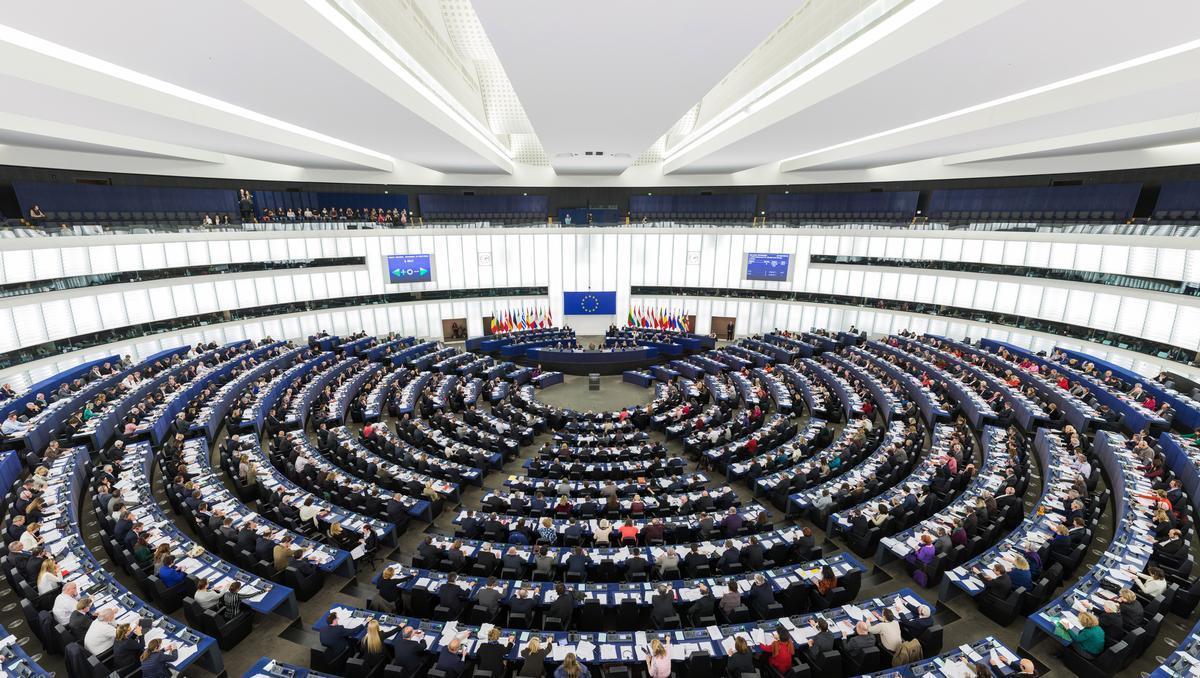
Last 21 October, in a hall of the European Parliament in Strasbourg, Federchimica, Fratelli d'Italia and Forza Italia organised a dinner debate dedicated to pfas, chemical compounds used in many industrial processes and found in everyday objects, considered by the scientific community to be harmful to humans and the environment.
There are pfas even in the blood of European ministers
The event, entitled 'The role of pfas for a sustainable future, between challenges and solutions', once again confirmed that Italy has no intention of calling for a ban on perfluoroalkyl and polyfluoroalkyl substances. This, at least, is the position of the industrialists invited to Strasbourg - mostly exponents of the pharmaceutical and automotive sectors - who share the thought expressed a year ago before European Commission President Ursula von der Leyen by former Prime Minister Mario Draghi: pfas must be protected because the European economy cannot do without them.
The initiative was promoted by MEPs Carlo Fidanza (Fratelli d'Italia) and Massimiliano Salini (Forza Italia) - with the participation, among others, of Pietro Fiocchi (Fratelli d'Italia), Salvatore De Meo (Forza Italia), Roberto Vannacci (Lega), Giorgio Gori and Elisabetta Gualmini (Pd) - with perfect timing.
The event confirmed that Italy has no intention of calling for a ban on PFAS
Recently, in fact, the European Chemicals Agency (Echa), three years after five European states (Germany, Denmark, the Netherlands, Sweden, and Norway) called for a ban on Pfas, has finally listed some categories of products (e.g. cosmetics) that will no longer be able to use the compounds in their processing. A partial success, since other sectors such as pharmaceuticals or the defence industry will be able to continue producing them, at least until there are no viable alternatives.
Pfas are also in wine, Europe on alert
Coordinating the event in Strasbourg was Marco Apostolo, a chemist specialising in polymers at the Normale di Pisa who plays a dual role: he is director of the innovative Syensqo research centre in Bollate, but also advisor to the presidency of Federchimica, the Italian chemical industry federation that is part of Confindustria and, in Europe, of the European chemical industry council (Cefic) and the European chemical employers group (Eceg).
Apostolo showed the image of a lush tree, a metaphor for chemistry, the power that saves us from war, disease and the wear and tear of modern life. The green branches to symbolise 'harmless' pfas such as Tfa, very short chain pfas, indispensable for electric cars, which scientific literature considers dangerous for the reproductive system, foetal development and the liver. The red branches represent the carcinogenic pfas, the yellow ones the compounds that do not accumulate and are therefore less dangerous.
The Italian government wants stricter limits for Pfas in drinking water
Colours aside, after decades of political and economic battles Federchimica has finally ascertained the existence of carcinogenic pfas. An admission of guilt, albeit partial: the pfas considered harmful by the Federation turn out to be just 30, out of a family that counts over 10,000 compounds.
What the supporters of pfas are still not questioning is the definition of pfas provided by the International Union of Pure and Applied Chemistry (Iupac) - drawn up by Pierangelo Metrangolo, professor of chemistry at the Politecnico di Milano and signatory of several patents in the name of Syesnqo Solvay - which differs greatly from the definition proposed by the Organisation for Economic Cooperation and Development (OECD), on which the banning of the substances is based.
Federchimica has confirmed the existence of carcinogenic PFAS. A partial admission of guilt: only 30 PFAS are considered harmful out of a family that numbers over 10,000
During the evening, Lara Ponti, vice-president of Confindustria with responsibility for sustainability goals, esg and environmental transition, uttered an emblematic sentence: 'Allow us to work with these compounds and if anything, punish us afterwards'.
Pfas provoke cancers, but for Mario Draghi they serve the green transition
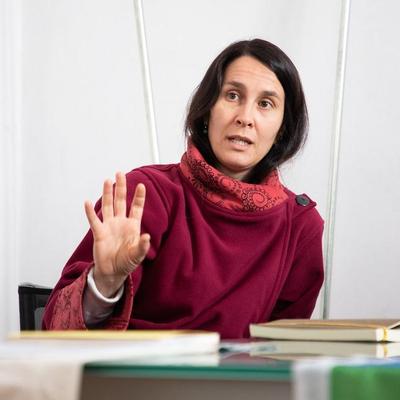
An appeal addressed to MEPs, especially to those who would like to eliminate pfas, which won applause and a few contrary hand-raises. Those who disagree is the Green MEP Cristina Guarda, the historical face of the fight against pfas, born and raised in Lonigo, epicentre of one of the largest pollutant contaminations in Europe. A voice soon silenced by the clinking of cutlery and glasses welcoming the dinner.
La tua donazione ci servirà a mantenere il sito accessibile a tutti
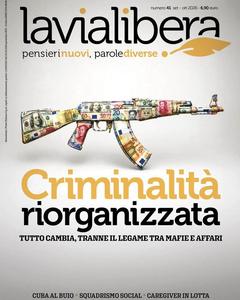
Il nuovo numero dedicato alla "criminalità riorganizzata": dalle reti finanziarie clandestine al narcotraffico, dalle nuove tecnologie alla violenza che torna nelle strade di Palermo. Un dossier che mette in fila numeri, inchieste e testimonianze per mostrare il volto attuale delle mafie

La tua donazione ci servirà a mantenere il sito accessibile a tutti
 Editoriali e Commenti
 Dona con Paypal
 Dona con Satispay