 English articles
 Mafie ● Resistenze
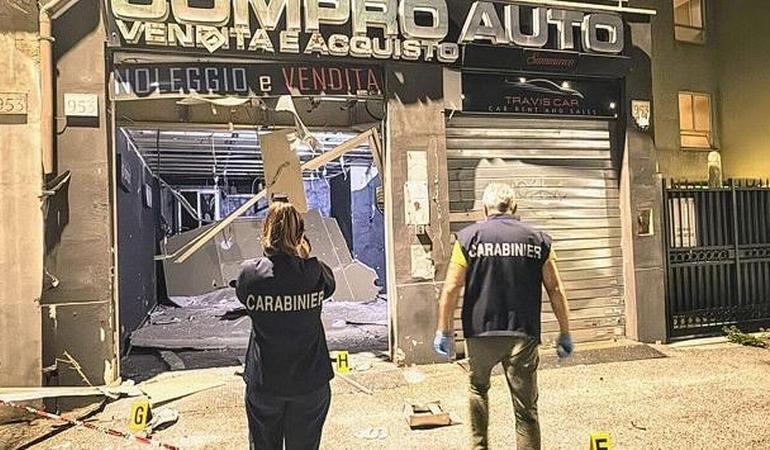
A Roma Est 15 bombe da settembre. L'ipotesi: clan che si riorganizzano

12 dicembre 2025
At 6.41 a.m. on 27 August 2025, the Allegra ferry of the Italian company Grandi navi veloci (Gnv) entered the port of Genoa, puffing out thick grey smoke, which continued to rise from the smokestack, gradually turning lighter until it docked at 6.56 a.m. At 7 a.m. that day, the air quality monitoring booth in Via Buozzi, the nearest one, began recording the concentration of nitrogen dioxide (NO2), one of the toxic substances produced by the combustion of ships' fuel. The stoppage had been going on for 23 hours and was caused by a malfunction, according to the regional agency for environmental protection in Liguria (Arpal). Documenting the smoke, like the others that followed until the evening, at least seven from as many large ships, are the 'Air Sentinels': citizens who, from the windows and balconies of their homes, photograph and measure polluting emissions and then publish a daily bulletin on Facebook .
'It is not just a claim mobilisation,' Eliana Pastorino, spokesperson for the San Teodoro Associations Network, of which the Sentinels are a part, explains to lavialibera . 'We also want to act proactively, to contribute to solutions. The network, made up of 17 local associations, monitors pollution in the Genoa harbour area and lobbies the authorities to remedy the issue. We meet the group in the provincial headquarters of Anpi, during the first meeting after the summer. A cautious optimism emerges from the speeches: after two years, mobilisation from below is starting to bear fruit. 'But now it is up to the administrations and politics,' Pastorino points out, 'we cannot make up for their shortcomings.
A window on the smog
Overlooking the port area, the San Teodoro district is among the most exposed to emissions. "It is no coincidence that out of 120 families we have had 33 cancer deaths in 35 years," says Mauro Burlando, a resident and member of the Sentinels. Applied to the city as a whole, the figures are alarming: according to an EU-funded study by the Barcelona Institute for Global Health, if the city complied with the World Health Organisation's (WHO) recommended limits for NO2, 302 deaths could be avoided each year, and half of them are attributable to emissions from shipping.
'When the Morandi bridge collapsed, we lost 43 people because someone didn't do the routine maintenance,' comments Federico Valerio, a retired environmental chemist. 'Here it is as if seven Morandi bridges collapsed every year, because the administrations didn't do what they had to do to bring the air quality within the limits. The values recorded by the Arpal cabin in via Buozzi have been exceeding legal limits continuously since 2010, violations that, together with those in other cities, have cost Italy an infringement procedure by the European Commission, followed by a condemnation by the Court of Justice. In recent years, the values recorded in the Ligurian capital have been improving, but it is too early to celebrate: from 2030, with the entry into force of the new directive on air quality, the limits will become stricter (in any case twice as high as those recommended by the WHO) and respecting them will be a challenge.
Over the limits
In the past year, according to Arpal data, the via Buozzi control unit recorded average daily NO2 concentrations above 50 micrograms per cubic metre, the limit that will come into force in 2030, on 67 days, while 277 days exceeded the threshold recommended by the WHO (25 micrograms per cubic metre). Of the 19, however, the figure is not available and most of the 'holes' are concentrated in the summer period, where pollution levels are significantly higher.
Arpal explained to lavialibera that the cause is linked to technical problems with the equipment or excessively high temperatures in the cabin. The associations have long been asking the agency to 'guarantee the full and constant efficiency of all the control units', to install new ones in the port and hill areas, and to publish a daily bulletin comparing the values recorded with the limits of the new European directive.
In mid-October, the announcement arrived that a detection station will be added in Via Dino Col. "In parallel, further sites are being examined, also indicated by the committees, in order to carry out in-depth campaigns in the retro-port area," says Massimiliano Pescetto, head of Arpal's Ponente air quality sector. In the meantime, it is the San Teodoro Association Network that publishes a daily bulletin, which compares the values recorded with the limits to be respected by 2030 and reports the photographs of fumes taken by citizens, specifying colour and duration.
The catalogue now contains 1700 pictures, a treasure trove of data and information. In addition, since last July, the associations have equipped themselves with around twenty Radielli, low-cost passive samplers that detect concentrations of pollutants in the air without the need for electricity or maintenance. Mauro Burlando has hung one on his balcony at home, overlooking the port area. The results, added to those of others scattered around the city, will form the basis for an independent study.
Helping the network is the ombudsman of Liguria, Dr Francesco Cozzi. 'I represent the guarantee body whose function is to mediate between citizens and the regional public administration, at whatever level,' he told lavialibera. - I was approached by the inhabitants of the San Teodoro neighbourhood and gave the necessary support'. Among other responsibilities, he is guarantor of the right to health. Precisely for this reason, he has supported the committee's demands. "There are various points on which we are working," Cozzi adds. "In particular, we are checking that the electrification phases of the quaysides take place on time, that the bodies in charge work together to improve people's living conditions, and that funds are found for monitoring. The latter will be improved in two ways: the installation of new control units and the analysis of data on admissions and discharges of patients for broncho-respiratory diseases in the various areas of Genoa.
Health at risk
'We must not wait for the new regulation to become enforceable and be condemned again,' Valerio continues. The health damage is already tangible, but there is still not enough awareness'. This is confirmed by Gianfranco Porcile, oncologist and Ligurian representative of Doctors for the Environment (Isde): 'The challenge is to show that environmental and health protection are not necessarily antithetical to the needs of the economy and work,' he says, speaking at the meeting. And he emphasises: 'We cannot stop at calculating deaths that could have been avoided, we must consider respiratory pathologies due to exposure to pollutants, such as bronchitis, bronchopneumonia and allergies'.
To this end, last February the Genoa city council unanimously approved a motion calling for an epidemiological survey to be launched, as the associations have been urging for some time. Contacted by lavialibera, the Ligurian social and health authority (Asl 3) states that the request is being evaluated by the various institutions involved, while 'a monitoring model based on the epidemiological data of the last ten years and on the trend of acute respiratory diseases, aimed at activating an early warning system, is being developed'. "It is a completely new and innovative perspective," says Giacomo Zappa, director of hygiene and public health at the health authority.
Alliances for the city
Among the achievements of the associations is the initiation of a constructive dialogue with the harbour master's office, which is responsible for verifying compliance with national and international shipping regulations, including those on emissions. "The work of the committees has helped us to target the ships to be inspected," explains frigate captain Alessandro Russo, head of the environment section. "We have computer systems that tell us which ships to inspect, but we can also go on board on the basis of a 'clear ground', i.e. a well-founded reason, which can also be smoke reported by citizens. In 2024, the captain's office carried out 120 inspections on foreign-flagged vessels and 35 on Italian ones, including 30 ferries.
In the first eight months of this year alone, there were 150 inspections: out of 110 foreign vessels inspected, ten had deficiencies and four were detained. Of the 40 Italian vessels investigated, ten did not comply with certain NOX parameters and one was detained. Russo emphasises the effort to control the vessels arriving in Genoa. "We have six or seven inspectors at our disposal and the port basin is becoming more and more important and deep, due to the megadrags that allow even ships as big as palaces to enter. This creates economic benefits on the one hand, but also externalities."
The Captaincy was also behind the Genoa blue agreement, signed in 2021 and renewed last April, a voluntary agreement whereby shipping companies commit to using cleaner fuels. An important step, but not enough for the committees: we need to electrify the docks, i.e. to allow ships at berth to power themselves via the shore network instead of keeping their engines running and continuing to emit pollutants. The project requires major infrastructure adjustments. Those at the port basin in Pra', intended for container ships, have been partially completed, while at the passenger terminal only the foundations have been laid. The work, for which the Port System Authority is responsible, is financed with €20m from the 2018 Genoa Decree and another €32m from the NRP, but has been delayed by two years. According to the Authority, the cabins will be installed at the end of December, while the first tests will start in March 2026. Terna will electrify the docks in the passenger port. Shipping companies and citizens are waiting to know at what rate.
'We will watch and do everything in our power to put political pressure on the progress of the work,' promises Genoa's deputy mayor Alessandro Terrile. As Eliana Pastorino says, after years of 'stonewalling' by the administration of former mayor Marco Bucci, now President of the Region, dialogue with the municipality, now led by Silvia Salis, is resuming. Terrile attended some meetings of the San Teodoro Network and relaunches: 'We are trying to establish a table that will deal with the issue on an ongoing basis. This is a positive sign for the associations, which emphasise that pollution 'is not only a health issue, but also a class issue'. 'In summer, when emissions are at their highest, who suffers? - Pastorino asks rhetorically - those who cannot afford to go elsewhere. Instead, we would like people to be able to stay in Genoa and start breathing again'.
This article was translated with the support of DeepL.
Original Source
La tua donazione ci servirà a mantenere il sito accessibile a tutti
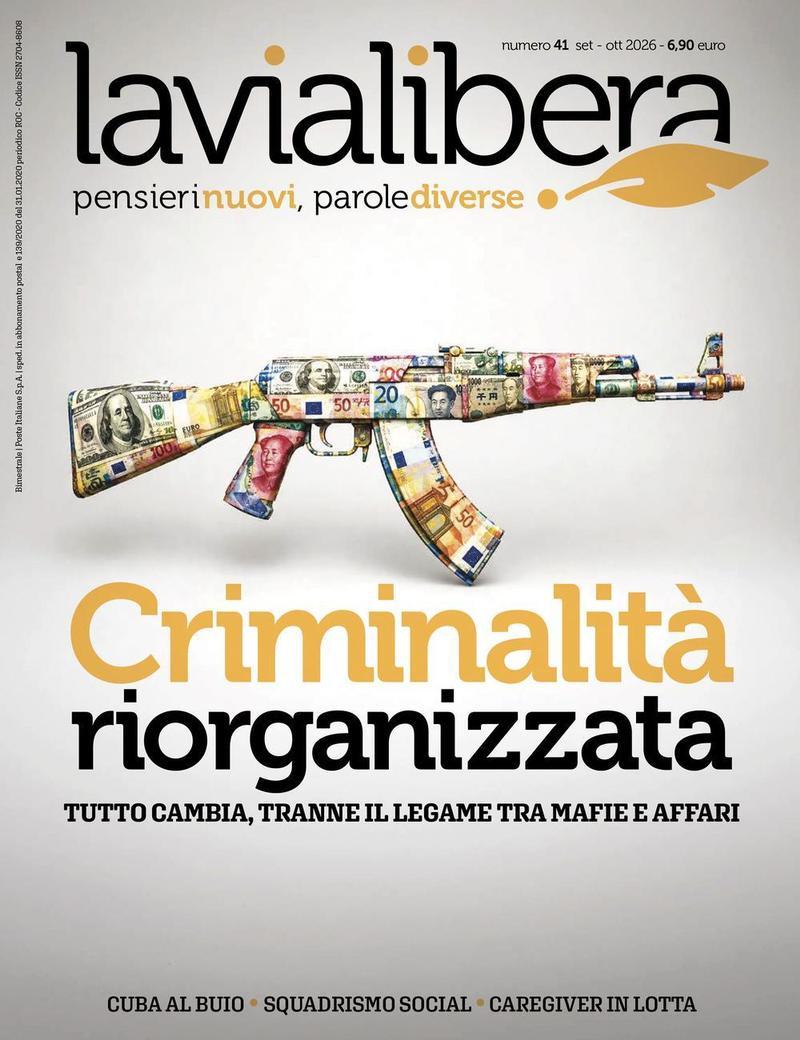
Il nuovo numero dedicato alla "criminalità riorganizzata": dalle reti finanziarie clandestine al narcotraffico, dalle nuove tecnologie alla violenza che torna nelle strade di Palermo. Un dossier che mette in fila numeri, inchieste e testimonianze per mostrare il volto attuale delle mafie

La tua donazione ci servirà a mantenere il sito accessibile a tutti

 Dona con Paypal
 Dona con Satispay