 English articles
 Mafie ● Resistenze
A Roma Est 15 bombe da settembre. L'ipotesi: clan che si riorganizzano

17 novembre 2026
Several companies in Russia produce PFAS—chemicals prized for their resistance to thermal stress but dangerous to living organisms—which are then imported into Europe. The import supply chain is made up of intermediary companies based in Germany and Israel, road haulage firms, multinationals that lease specialized containers and, finally, the buyers: the large PFAS multinationals, such as Syensqo (formerly Solvay), which need to source the raw material for their products. This intricate system makes it possible to buy compounds that European policymakers want to ban but that industry—the automotive and defense sectors in particular—does not want to replace.
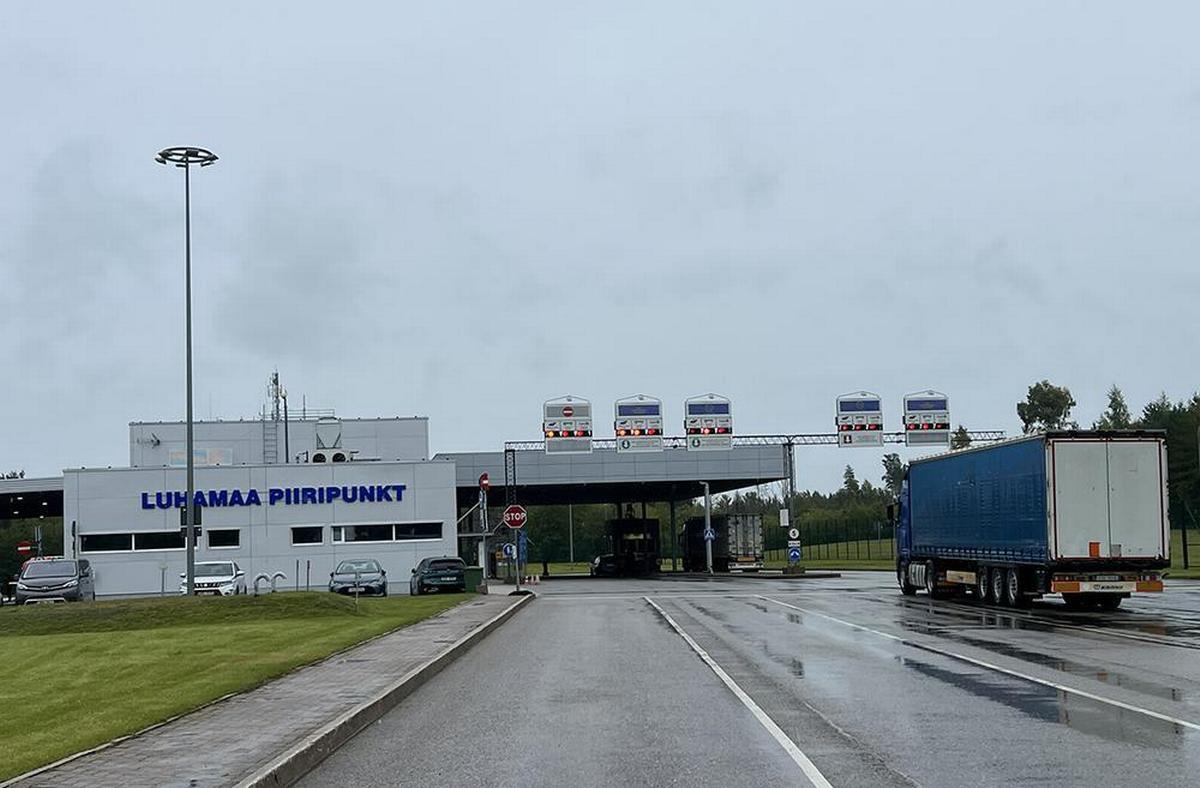
Through import registries, emails, and trips along the Russian border, lavialibera has reconstructed who the players are that feed the arteries of the European and global chemical industry. A two-part story that begins in St. Petersburg and ends in Alessandria, Italy. Point of entry into the EU: Estonia, at least on paper. Below is part one of the investigation.
They resist heat, water, and extreme physical stress. They also resist time itself—the very trait that makes them dangerous to living organisms. These are per- and polyfluoroalkyl substances, or PFAS, commonly known as "forever chemicals." Several Russian companies manufacture them for export to Europe. The import pipeline involves intermediary companies registered in Germany and Israel, trucking logistics operators, multinationals leasing specialized containers, and finally the buyers: major PFAS producers—such as Syensqo (formerly Solvay), which has a site in Italy—that require these raw materials. Some continue to source them despite Russia's war in Ukraine and the resulting trade restrictions. Lavialibera has reconstructed one of these supply chains through import registries, confidential emails, and a reporting trip along the Russian border to Estonia. A two-part story stretching from St. Petersburg to Alessandria, in Italy's northwestern Piedmont region. Part one begins here.
PFAS are a group of more than 10,000 man-made substances: carbon and fluorine atoms linked together in chains of varying length. Invented by the American company DuPont in the 1940s, they arrived in Europe after World War II and came to be used in hundreds of consumer products—ski jackets, non-stick pans, or dental floss, for example. But the very resistance that so appeals to the commercial world makes them persistent in the environment, bioaccumulative (they build up in living organisms), and toxic, capable of damaging certain organs, fertility, and the immune system.
Possibly in response to producers leaving the United States, a new company was born in St. Petersburg in those years: Anles. In January 2001, Lev Moiseevich Kogan, a chemistry professor at St. Petersburg State University, registered the firm with the local chamber of commerce. Operating out of a small factory wedged between a railway line and the Neva River, Anles set out to manufacture fluorinated organic compounds, including monomers, polymers, and specialty ingredients for high-performance synthetic rubbers (fluoroelastomers)—in other words, PFAS. Kogan was a seasoned specialist: during the Soviet era, he had worked in industrial polymer chemistry, co-patenting methods with a team of Soviet researchers to produce high-resistance synthetic rubber capable of matching or outperforming natural rubber.
Pfas provoke cancers, but for Mario Draghi they serve the green transition
In 2005, Lev Kogan expanded into foreign markets by establishing Ftoran, an intermediary trading company designed to facilitate commerce between Russia and Europe. According to Ftoran’s website: "With our company Ftoran, based in southern Germany, we represent our colleagues at Anles Ltd., based in St. Petersburg—a Russian manufacturer founded 10 years ago out of one of the leading developers and producers of organofluorine products (monomers and polymers) in the former Soviet Union."
The mid-2000s marked a watershed for PFAS regulation in Europe. In 2006 the EU restricted the marketing and use of PFOS, a cornerstone compound of the PFAS group, and in 2009 PFOS was added to the Stockholm Convention on Persistent Organic Pollutants, the global treaty in force since 2004. For European industry, this triggered the first wave of intense regulatory pressure: a push to curb emissions and develop safer alternatives, paired with import bans on restricted chemicals. However, these rules suffered from a critical loophole: they targeted only specific, enumerated molecules like PFOS. Scores of other PFAS—including the precursor monomers essential for manufacturing fluorinated industrial rubbers—remained entirely legal and freely importable. Still, tighter oversight and surging compliance costs led several European manufacturers to cut output or shut down plants altogether. This created a market vacuum that external suppliers were quick to fill. Operating beyond the borders and jurisdiction of the European Union, Anles became a pivotal supplier for circumventing domestic constraints, using Ftoran as its gateway to keep feeding these chemicals into the European market.
Pfas, thousands of people in Piedmont drank contaminated water, says Greenpeace
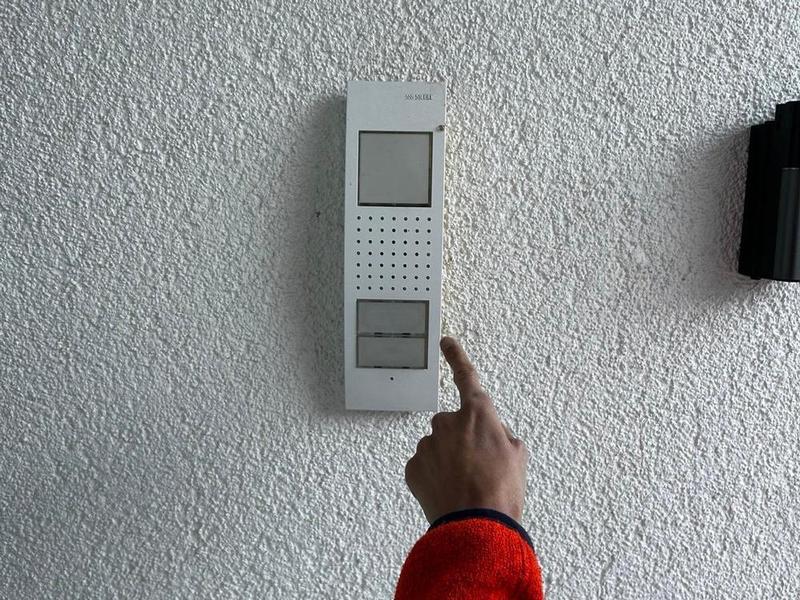
Anyone looking up Ftoran’s registered address today ends up in Birkenau, a quiet town in the Odenwald hills, about half an hour’s drive from Heidelberg. In a tranquil residential suburb, one house stands out for a single detail: its white window shutters are drawn tight, uniform, and motionless, as if untouched for years. Next to the front door sits a double intercom and an unlabeled mailbox holding a few letters. Nobody answers the bell. Neighbors told lavialibera that visitors appear only sporadically, staying for just a few minutes—likely long enough to collect the mail. No lights come on regularly at night; there are none of the daily routines of an inhabited home. When someone does open the door, residents say, it is usually Galina Kogan, the wife of Russian businessman Mikhail Kogan, son of the St. Petersburg professor.
A search of Galina’s name leads to a LinkedIn profile detailing a three-decade international career. Between April 1988 and November 1989, she worked in Russia as a process engineer at Giprokauchuk, the Soviet monomer research institute—the very same field in which her husband’s family operated. In March 1993, she relocated to Haifa, Israel, working until February 1998 as a polymer chemist split between biomedical firm Sbpm Ltd and the Technion (Israel’s oldest technical university, founded in 1912), before pivoting to IT as a software programmer for Mercury Interactive in Yehud until 2003. Her permanent move to Germany came in the mid-2000s: starting in May 2008, she worked as a software tester in Bad Homburg for ticketing company Ticketcorner GmbH, later becoming a quality consultant for EXCO GmbH, a software firm near Frankenthal.
Galina’s geographic footprint—spanning Russia, Israel, and Germany alongside her husband and his ventures—proves key to mapping Mikhail Kogan’s movements and business dealings between St. Petersburg and Europe. To locate the couple’s actual residence, reporting shifted to Heidelberg, which neighbors identified as their usual whereabouts. In this university city along the Neckar River, the minimalist modern synagogue serves as a Saturday morning gathering point for the small local Jewish community. Inside the quiet sanctuary before services, lavialibera spoke with the rabbi, who agreed to an interview. He described Mikhail Kogan as a familiar yet irregular figure who has commuted between Russia and Germany for years without a fixed schedule. He shared further details about the family: Galina attends the synagogue occasionally; Mikhail’s elderly mother also lives in Heidelberg; and the couple has a daughter, about whom he declined to elaborate. Taken together, these details confirm the initial suspicion: the house in Birkenau functions merely as a formal mail drop, while Kogan’s personal life and business operations straddle Russia and the Heidelberg area, about half an hour’s drive from Ftoran’s registered office.
There are Pfas in the blood of those who live near the Solvay plant in Alessandria
Galina Kogan is a specialist in the foundational building block of every fluorinated polymer chain: the monomer. Composed of carbon and fluorine atoms arranged in various branching structures, individual monomers link together like train cars to form polymers. Each resulting polymer possesses distinct properties—specific resistance to extreme heat, pressure, or harsh chemical environments.
One such compound is 8-CNVE, a specialized monomer used to produce high-grade polymers for the aerospace, electronics, and pharmaceutical sectors, as well as heavy-duty industrial seals. It is also one of the best-selling products manufactured by Anles, the Kogan family’s St. Petersburg company.
Lavialibera queried Import Genius, a global trade database that compiles bills of lading—the shipping manifests filed by suppliers detailing the cargo, the buyer, and any commercial intermediaries involved—searching under Anles’s Russian corporate name. For as far back as digital trade records allow tracking, the data reveals steady exports bound for both Europe and Asia, with Russian shipments landing at the doorsteps of major multinationals such as 3M’s German subsidiary Dyneon and the Dutch operations of Chemours.
In Italy, the first documented shipment of 8-CNVE from St. Petersburg destined for the Italian facility of Solvay (now operating as Syensqo) in Spinetta Marengo—a major industrial chemical complex in the Piedmontese city of Alessandria—dates back to November 2021: a consignment of 200 net kilograms valued at over €230,000. This monomer is a key ingredient in a specialized line of Tecnoflon products manufactured by Syensqo: ultra-high-performance fluoropolymers used in rubbers built to withstand a range of stresses, found in aerospace gaskets and in coverings for defense vehicles. While these applications are publicly detailed in patents filed by Solvay Specialty Polymers Italia, the company declined to comment when asked directly how it utilizes the imported monomer.
How the chemical lobby and Italian MEPs are fighting the EU’s PFAS ban
Beyond identifying the buyer and seller, the bills of lading reveal two telling details. First, a familiar intermediary appears on the paperwork: Ftoran, registered to the quiet house in Birkenau. Mikhail Kogan was selling his family’s Russian-made chemical to Solvay through the German-registered trading firm. Second, a third country enters the picture: Estonia. On the November 2021 shipping manifest, the listed destination country code is "EE"—the Baltic EU member state bordering Russia.
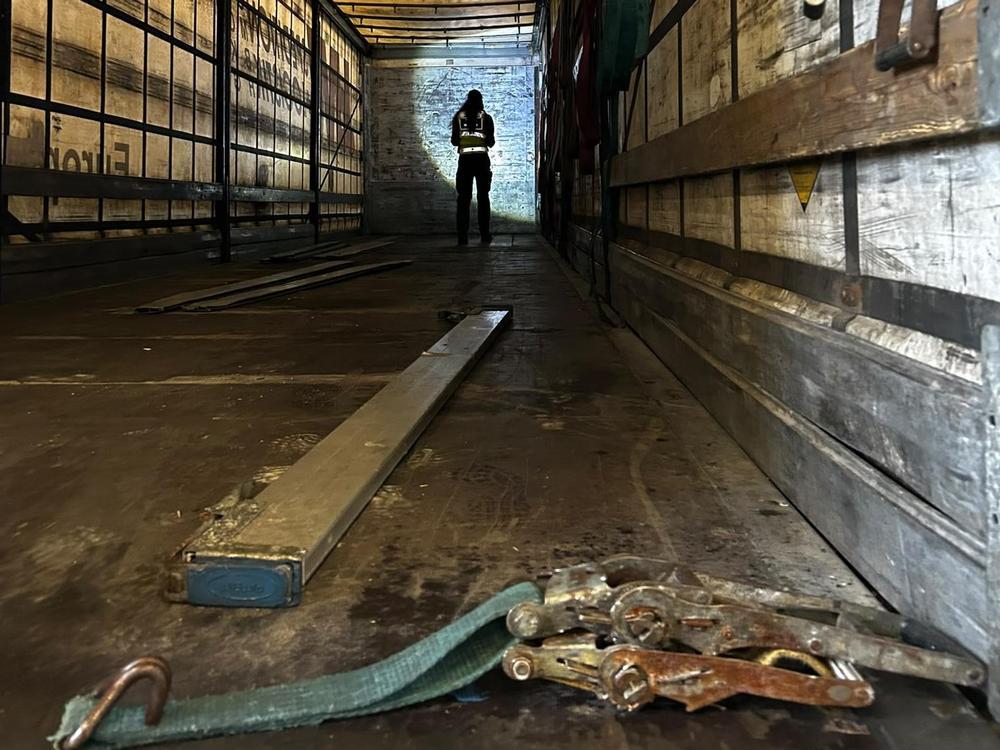
In short, the chemical is loaded into specialized containers in St. Petersburg, crosses into the European Union via the Estonian border under the facilitation of a German intermediary, and ultimately arrives at the plant in Spinetta Marengo. Why does it take four countries to sell a single monomer? We put that question directly to Syensqo, which, in addition to 8-CNVE, sources many other PFAS from Russia. The company declined to address the specific routing, offering instead a broad statement: "As part of our standard approach to sourcing and risk management, Syensqo maintains and develops diverse sourcing options for strategic raw materials across multiple geographic regions, with the objective of strengthening the resilience and continuity of our supply chain."

Inchieste, interviste, dati, rubriche:
perché sapere è un diritto, tacere una scelta.
Su carta e digitale
Within Italy, Alessandria is not an isolated case. Anles-produced 8-CNVE has not been shipped exclusively to Syensqo; import registries identify two additional Italian buyers of the same Russian compound: Polis, based in Brescia (in northern Italy’s Lombardy region), and Alpa, which operates between Milan and Santa Croce sull'Arno (a major Tuscan leather-tanning and chemical hub near Pisa).
Examining their trade flows illustrates how different companies reacted as the geopolitical landscape shifted following Russia’s full-scale invasion of Ukraine and the subsequent rollout of EU sanctions. Import records show that Alpa continued purchasing 8-CNVE from Anles until September 2023, when orders abruptly ceased following an unusually large final shipment—double the volume of previous monthly deliveries.
A similar pattern emerges for Polis, which imported the Russian compound until May 2023 before halting direct procurement from the St. Petersburg supplier. The timing is significant: that window coincides with the tightening of European sanctions against Russia and mounting regulatory and reputational scrutiny on firms continuing to trade with Russian suppliers, even in goods not explicitly covered by targeted sanctions lists. Both companies appear to have severed ties with Anles during that period, though both declined to answer our questions about how they replaced the chemical in their manufacturing processes or at what financial cost.
Syensqo’s trajectory, however, diverged sharply. Despite the sanctions environment and the very legal and reputational risks that prompted Polis and Alpa to pull back, the company continued sourcing the substance. Most striking is what happened to the price: beginning in the autumn of 2023, the cost of 8-CNVE exported to European markets surged up to eightfold compared to previous levels. A price spike of that magnitude is a classic hallmark of a constricted supply chain—fewer available transit routes, fewer intermediaries willing to handle the trade, and heightened risk at every step. Yet the company did not halt its purchases; instead, it paid up to eight times more rather than lose access to the material.
It is a decision that raises pointed questions about deep-seated industrial dependence on this compound, the true availability of viable alternatives, and how Syensqo weighed—or chose to overlook—the implications of continuing to import a Russian-made chemical, even indirectly, while war rages in Ukraine.
This investigation was produced with the support of Journalismfund Europe in collaboration with Ekaterina Mereminskaia.
Read part two of the investigation here.
La tua donazione ci servirà a mantenere il sito accessibile a tutti
Il nuovo numero dedicato alla "criminalità riorganizzata": dalle reti finanziarie clandestine al narcotraffico, dalle nuove tecnologie alla violenza che torna nelle strade di Palermo. Un dossier che mette in fila numeri, inchieste e testimonianze per mostrare il volto attuale delle mafie



La tua donazione ci servirà a mantenere il sito accessibile a tutti
 Dona con Paypal
 Dona con Satispay