 English articles
Permessi dal carcere duro e telefonini in cella, il pericolo dei boss che tornano al comando

1 settembre 2025
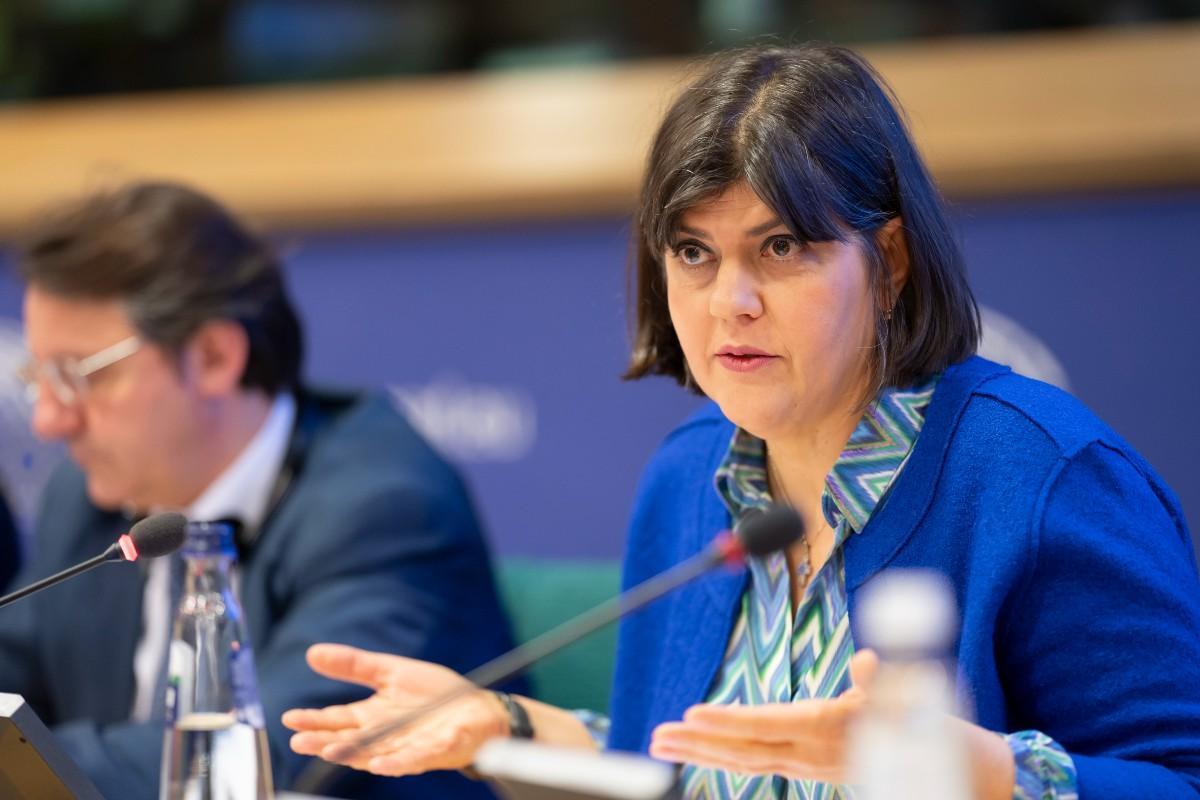
On the wall behind her desk in her office in Luxembourg is the famous photo of Giovanni Falcone and Paolo Borsellino, the two Italian prosecutors killed by the Mafia in two differents attacks in 1992, in Palermo (Sicily). "It comes from a museum I visited in Palermo; the guide was Borsellino's former driver, who gave us real insight into their work. The two Italian judges remain a lasting example." Laura Codruța Kövesi, 52 years old, is a Romanian anti-corruption magistrate and heads the European Public Prosecutor's Office (EPPO). Since June 2021, she has been investigating cases of fraud against the EU budget: scams to obtain EU funds and tax evasion. White-collar crimes, but not only. "I expected a high workload and many cases to follow, but there was something I didn't expect to see."
Prosecutor Kövesi, what surprised you?
Organized crime has systematically infiltrated fraud schemes against national and EU budgets. In the four years since we began operating, we've uncovered what I call a new continent of crime.
What do you mean?
VAT and customs revenues should flow into national and European budgets, but frauds have been tolerated, and that is unacceptable
There is no member state in Europe that can claim to be "clean" when it comes to financial fraud: VAT (Value Added Tax, the sales tax applied across the EU, ed) and customs fraud, as well as fraud involving EU funds in general, have been underreported and underinvestigated for years. When we first started working, we noticed large discrepancies between member states. In theory, VAT and customs revenues should flow into national and European budgets, but frauds have been tolerated, and that is unacceptable. Now we see that most of our cases involve organized criminal groups; they are growing, becoming stronger, and defrauding EU and national budgets. Ultimately, it's not just about money, but also about internal security.
Why?
"White-collar and financial crime are not a niche, 'mild' phenomenon, but are at the heart of illicit activities and often lead to violence"
In the European Union, the illicit drug market is worth approximately €30 billion, while VAT fraud amounts to over €50 billion. I wonder: if criminals kill for €30 billion, what will they do for €50 billion? I wish everyone realized that white-collar and financial crime are not a niche, "mild" phenomenon, but are at the heart of illicit activities and often lead to violence. We have seen powerful criminal organizations invest in VAT fraud because it is not only highly profitable, but also allows them to launder the proceeds of other crimes, and the consequences are now clear.
Are you referring to specific groups like the Italian Mafia?
"These organizations are designed to defraud, launder money, repatriate funds to China, and then reinvest in Europe. They are causing billions of euros in damage"
The groups we are investigating include people of different nationalities; there's still no complete picture, but we've begun mapping them. Over the past four years, it's become clear that Chinese criminal organizations are a growing problem in Europe. They don't just commit fraud; they also play a significant role in money laundering. Generally, criminal groups are well-organized and flexible. If one member state tightens its control over ports, they immediately move operations elsewhere. They are adaptable, have access to vast resources, and have even created their own online marketplaces. They use their own communications systems, and many members come from third countries – Chinese groups are a case.
These organizations are designed to defraud, launder money, repatriate funds to China, and then reinvest in Europe. They are causing billions of euros in damage, and no matter how many tariffs Europe imposes on Chinese companies, these networks will always find a way around them.
Will US tariff policy cause changes in this system?
I can't say whether this trend will increase or decrease because of tariffs, but the problem was serious even before. No one cared about VAT and customs fraud; everyone said, "We don't have enough resources, we want more money in the budget," but VAT and tariffs are sources of revenue. Reducing the VAT gap means having more money. And I'll tell you where this money is: in the hands of criminals. Our job is to close this gap, but I was surprised to discover that some countries don't have specialized agents.
Which member state was not ready to fight this kind of frauds?
"At the EPPO, we do as Falcone said: "Follow the money." We need to block the financial power of criminal groups, but if we don't do it everywhere, it won't work"
It's not about one country, it's a mindset. Italy has the excellent Guardia di Finanza (the Financial police unit, ed.), and this is an example that should be replicated throughout the EU. We also collaborate closely with the state police, another excellent example. Law enforcement agencies generally know what to do, but when I speak to finance ministries, I always hear that they lack the resources. There are institutions – customs agencies, oversight bodies, regulatory offices – that have responsibilities but don't fulfill them. We need to change our strategy. At the EPPO, we do as Falcone said: "Follow the money." We need to block the financial power of criminal groups, but if we don't do it everywhere, it won't work.
Italy tops your annual investigation reports: 764 open cases and damages estimated at €7.05 billion, including €4.65 billion in unpaid VAT. Is this due to organized crime or more effective control systems?
We don't want to give the Italian mafia too much publicity; our statistics aren't based on rankings. Italy's data reflects the high level of control and protection of EU funds; they don't sweep things under the rug. I wish every country had the same level of professionalism, determination, and commitment as Italy, which has excellent prosecutors and investigators who do extraordinary work under difficult conditions.
Other countries sometimes don't seem very interested.
"We have a "bird's eye view " – we see the entire chain of criminal activity and its actors"
We started with twenty-two member states. Now we have twenty-four. From the beginning, I kept hearing the same thing: "We are a clean country." After a few years, reality proved otherwise. Take, for example, the Admiral case (a major investigation into VAT evasion in the trade of mobile phones and other electronic equipment, ed.). It is the largest investigation we have ever conducted, with estimated damages of approximately €2.9 billion. There are suspects from multiple countries and crimes committed in every member state, including those that claimed to be clean. In some of these states, the authorities were unable to detect fraud because some criminal groups were not causing damage where they were based, despite playing a key role in cross-border fraud.
In some cases, state authorities only learn about what's happening on their territory thanks to our investigations. We have a "bird's eye view " – we see the entire chain of criminal activity and its actors. That's why we're able to connect the dots between different parts of a plan. We've even discovered crimes committed in one member state while investigating another. And if the case falls outside our remit, we immediately share the information with the relevant authorities. Through our investigations, we've also uncovered links to terrorist financing, arms and drug trafficking, human trafficking, and other types of crime.
Are there countries that still resist the work of the European Public Prosecutor's Office?
Sometimes resistance is due to a lack of political will, other times to legislative limitations. In some cases, politicians think they can interfere in our investigations, but that's not how it works. For example, in Croatia, the prime minister claimed we lacked jurisdiction in a case. I responded that it's not up to the prime minister to decide on our jurisdiction, but to the courts. Whenever someone tries to obstruct us, we fight back, and we have the legal tools to remain independent. Without this autonomy, we couldn't properly carry out our work.
A serious phenomenon is agricultural subsidy fraud, which has been widespread throughout Europe for years. Is anything changing thanks to EPPO?
"Some member states had never investigated the fraud for agricultural subsidy. As one of my colleagues said, they couldn't even imagine that someone could steal money this way"
Yes, because the EU budget cannot be protected through administrative channels alone. The damage we are uncovering demonstrates that preventive and administrative measures were insufficient; criminal investigations were lacking. Some member states had never investigated this type of fraud. As one of my colleagues said, they couldn't even imagine that someone could steal money this way. Now, thanks to the EPPO, we have shared our knowledge and techniques with national authorities; they know where and how to look. So yes, I believe agricultural fraud will decrease thanks to our presence.
Are there other areas you are investigating?
Infrastructure, healthcare, digital development, education, fisheries, and research. Fraud can happen anywhere.
In your latest report, did you report on the initial investigations into the use of funds from the Next Generation EU plan?
It may still be too early to draw any general conclusions; we only began investigating these funds a year and a half or two ago, when the money began flowing to member states. But yes, criminals always find ways to steal, regardless of the rules in place.
Are you still investigating the procurement of COVID-19 vaccines in the EU?
We can't reveal too much for now. We've interviewed several witnesses, including some EU officials, submitted formal requests for judicial assistance, and made requests for international cooperation, but we can't provide further details at this time.
How is cooperation with the Italian National Anti-Mafia Prosecutor (DNA)?
"We both work for the benefit of European citizens; we can take this partnership to the next level"
I had a very positive meeting with the national anti-mafia prosecutor, Giovanni Melillo. Working with the DNA is a stimulating and positive challenge. We understand what's at stake and are committed to deepening our cooperation. At the beginning of our work, there were concerns about the potential overlap between our institutions, but that's why we met: to define workflows and ways to share information effectively. We both work for the benefit of European citizens; we can take this partnership to the next level.
Will the entry into force of the European Anti-Money Laundering Authority (AMLA) contribute to the work of the European Public Prosecutor's Office?
I have already met with Director Bruna Szego, and we have begun preparing our working agreement. A European Prosecutor will be an observer on the AMLA General Council, an equally significant role. We hope that AMLA will improve the identification of criminal conduct under our jurisdiction and provide useful information for our investigations.
What is your biggest challenge?
First, make everyone understand that the European Union budget cannot be protected without fighting organised crime. Second, earn the trust of citizens, which is the real test of how well a prosecutor's office is doing. We are the youngest institution in the EU and I believe we have earned people's trust so far. We see this in the number of complaints, which increase every year. Last year we received over 4,600 from citizens, more than from national authorities (1,760) or EU institutions (113).
La tua donazione ci servirà a mantenere il sito accessibile a tutti
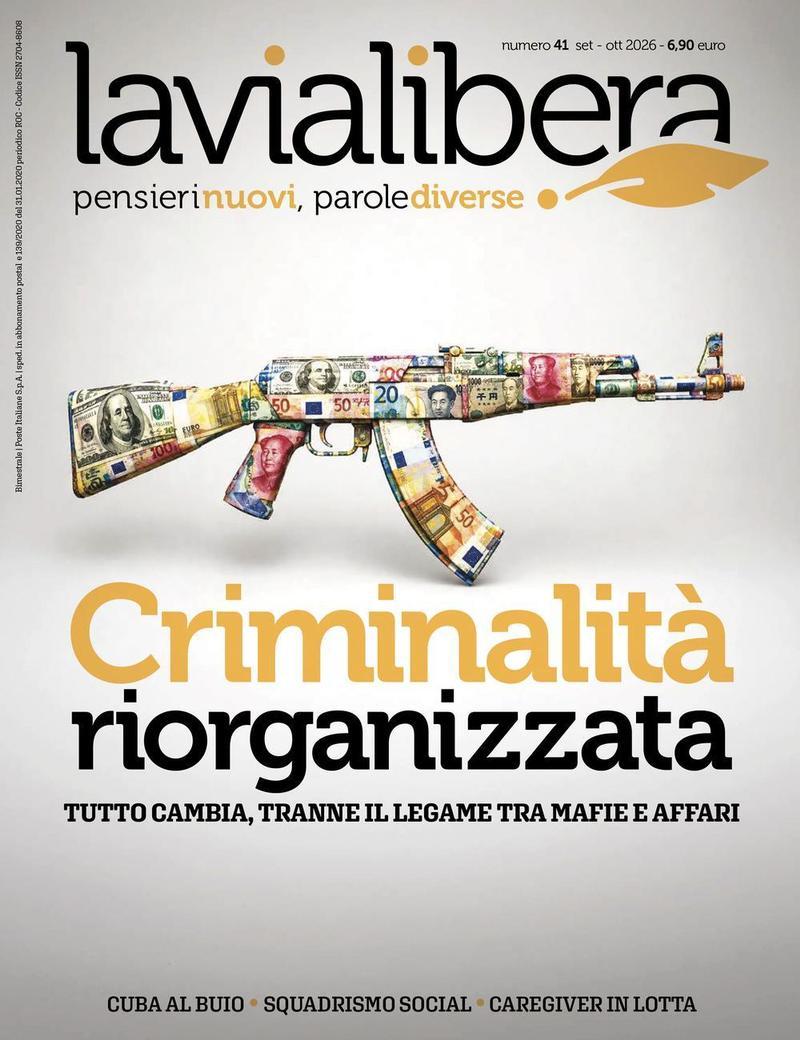
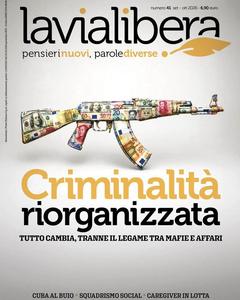
Il nuovo numero dedicato alla "criminalità riorganizzata": dalle reti finanziarie clandestine al narcotraffico, dalle nuove tecnologie alla violenza che torna nelle strade di Palermo. Un dossier che mette in fila numeri, inchieste e testimonianze per mostrare il volto attuale delle mafie

La tua donazione ci servirà a mantenere il sito accessibile a tutti
 Editoriali e Commenti
 Dona con Paypal
 Dona con Satispay